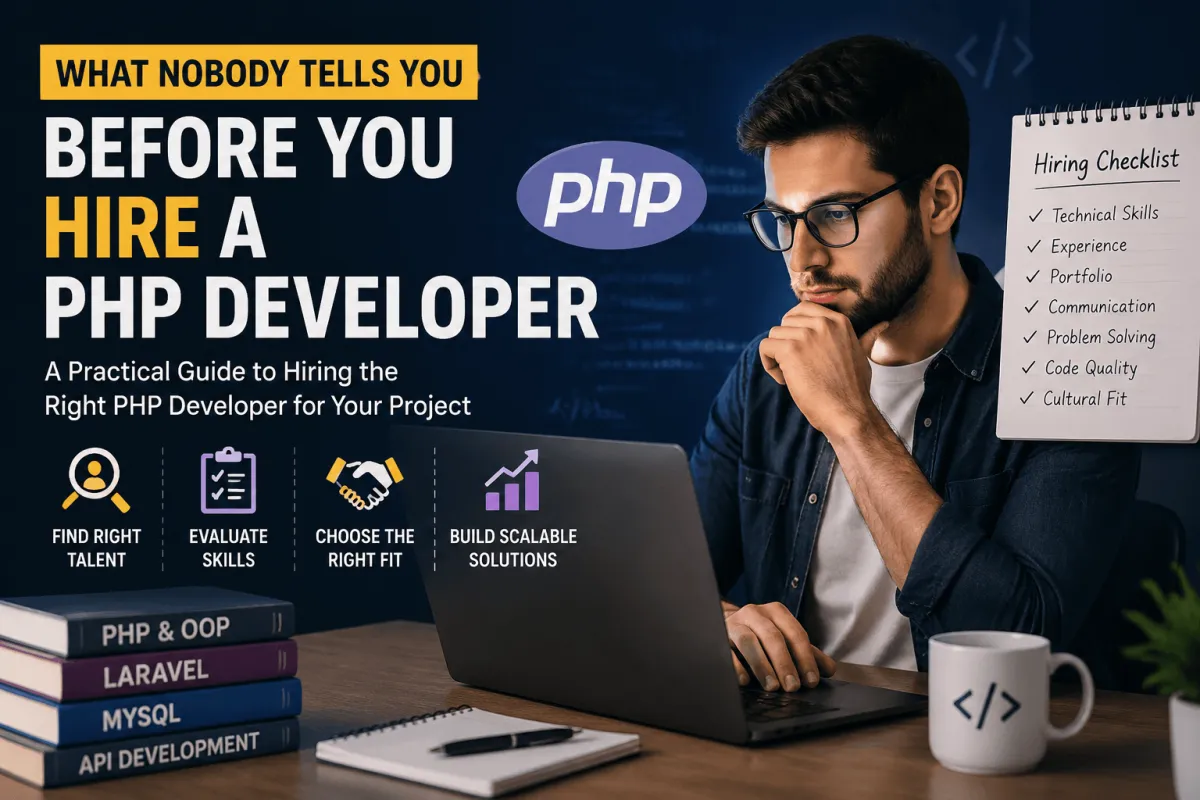
Hiring backend talent is often treated as a routine HR task, but PHP development does not work that way. It sits at the core of many business systems, from e-commerce platforms to custom APIs and enterprise dashboards. A wrong hiring decision here does not just slow development, it can introduce long-term technical debt that becomes expensive to fix later.
The challenge is that PHP is widely used, which creates the illusion that developers are interchangeable. In reality, skill levels vary significantly based on exposure to architecture, database design, and real production environments. This makes the process of hiring far more technical than most decision makers expect when they first try to hire php developer professionals.
In this guide AI Innovate Tools breaks down the key areas that actually matter in hiring decisions. Instead of focusing on resumes or surface-level screening, it focuses on how real engineering capability can be identified, evaluated, and retained in a structured way.
Why Hiring a PHP Developer Is More Complex Than Posting a Job Listing
Hiring a PHP developer is often underestimated because the process looks simple on the surface. Most businesses assume that posting a job and receiving applications is enough to find the right person. In reality, PHP development spans a wide range of skill levels, from basic WordPress customization to complex distributed backend systems. This creates a significant gap between what candidates claim and what they can actually deliver in production environments.
Another hidden complexity is that PHP is not just a language, it is an ecosystem. Developers may specialize in Laravel, Symfony, custom frameworks, or legacy systems. Each of these requires different architectural thinking and problem solving approaches. Without understanding these differences, hiring managers often evaluate candidates using generic criteria, which leads to poor hiring decisions.
The final challenge is that backend work is not always visible. A developer can show a polished frontend project while still lacking backend logic skills. This makes evaluation harder for non technical decision makers. To properly hire php developer talent, you need structured evaluation methods that go beyond resumes and focus on real system thinking ability.
You may also like:
Freelancer vs Full-Time PHP Developer: Which One Your Project Actually Needs
Choosing between a freelancer and a full-time developer depends heavily on the nature of your project. Many businesses assume full-time hiring is always safer, but that is not always true. If your work involves short-term tasks like API development or bug fixing, a freelancer can often deliver faster and at lower cost.
Freelancers usually bring focused expertise because they work across multiple projects. However, their involvement is often limited to delivery rather than long-term system ownership. This can become a problem when your project requires continuous improvements or ongoing maintenance. The handover process is also a common challenge when freelancers move on to other clients.
Full-time developers, on the other hand, are better suited for long-term product development. They develop deeper understanding of your codebase and business logic over time. This improves consistency and reduces communication gaps. However, hiring full-time without sufficient workload planning can lead to unnecessary costs, which is why the decision should always be based on project lifecycle needs rather than assumptions.
You may also like:
The Technical Skills You Must Verify Before Making Any Hiring Decision
One of the biggest mistakes in hiring is assuming that listing PHP frameworks automatically means competence. Many candidates can work with Laravel or CodeIgniter without understanding underlying backend principles. This creates a false sense of confidence during interviews and leads to poor technical outcomes later.
Strong PHP developers must understand object oriented programming, database design, and API architecture. These skills determine how scalable and maintainable a system will be. If a developer cannot explain relationships between database tables or how they optimize queries, then framework knowledge alone is not enough.
Practical testing is the most reliable way to verify skills. Instead of asking theoretical questions, give candidates real-world scenarios like designing a REST API or debugging a performance issue. This approach helps identify whether you are dealing with an experienced engineer or someone who only has surface-level exposure.
You may also like:
Where to Actually Find Qualified PHP Developers Worth Interviewing
Finding strong candidates is not just about posting jobs on popular platforms. Job boards often attract high volumes of applicants, but many lack the required technical depth. This creates a screening burden that slows down the hiring process significantly.
Specialized developer communities and technical platforms tend to produce better candidates. These environments attract professionals who actively build projects and engage with real technical challenges. As a result, the signal-to-noise ratio is much higher compared to generic job listings.
Referrals remain one of the most reliable sources for hiring PHP talent. Experienced developers usually recommend peers they have worked with directly, which reduces uncertainty. If your goal is to hire php developer professionals who can handle production systems, sourcing strategy becomes just as important as interview quality.
You may also like:
Red Flags to Watch During the PHP Developer Interview Process
One of the strongest warning signs is when a candidate cannot clearly explain their past projects. Developers who only describe features without discussing architecture decisions often lack real engineering experience. This usually indicates tutorial-based learning rather than production exposure.
Another red flag is weak debugging explanation. Experienced developers should be able to describe how they identify, isolate, and fix issues in complex systems. If a candidate struggles to explain their troubleshooting process, it suggests limited hands-on problem solving experience.
Lack of familiarity with version control and testing frameworks is also concerning. Modern PHP development requires collaboration and structured workflows. If a candidate has never used tools like Git properly or does not understand testing concepts, they may struggle in real production environments.
You may aslo like:
How to Evaluate a PHP Developer Portfolio Without Being a Technical Expert
Non technical hiring managers often struggle to evaluate portfolios effectively. A visually appealing project does not necessarily reflect strong backend logic. Many applications look good on the surface but are poorly structured underneath.
Instead of focusing only on design, look for complexity in the project. Strong portfolios include APIs, authentication systems, database relationships, and integrations with external services. These elements indicate real backend engineering experience rather than simple template customization.
It is also useful to ask candidates to explain their projects verbally. Their ability to break down system architecture in simple terms shows both technical clarity and communication strength. This is important because even strong developers can fail if they cannot communicate effectively with teams.
Setting the Right Budget When You Hire a PHP Developer
Budget plays a major role in the quality of candidates you attract. Low budget listings often bring in large numbers of applicants, but many will lack the necessary experience. This increases screening time and reduces hiring efficiency.
Offshore hiring can reduce costs but introduces additional challenges. Time zone differences, communication delays, and cultural differences can affect project speed and clarity. These factors must be considered alongside cost savings rather than ignored.
A better approach is to align budget with technical complexity. If your system requires scalability, security, and long-term maintainability, then higher investment is justified. When you hire php developer talent based on skill level rather than cost alone, you significantly improve project outcomes.
You may also like:
Onboarding a PHP Developer the Right Way to Avoid Early Failures
Many hiring failures occur after the developer is already selected. Poor onboarding is one of the most common reasons new hires underperform in the first month. Without proper guidance, even skilled developers take longer to become productive.
Documentation plays a critical role in onboarding success. Developers need clear instructions about environment setup, system architecture, and coding standards. Without this, they spend more time understanding the system than contributing to it.
Clear communication of deliverables and expectations is also essential. Defining tasks, timelines, and reporting structures ensures alignment from day one. Businesses that invest in structured onboarding reduce early friction and improve long-term developer performance significantly.
You may also like:
Conclusion
Hiring backend developers is not a simple recruitment task, it is a technical decision with long-term consequences. When you hire php developer professionals without a structured evaluation process, you increase the risk of delays, poor architecture choices, and rising maintenance costs.
A better approach is to evaluate skill depth, not just framework familiarity. Combine this with careful sourcing, realistic budgeting, and structured onboarding to ensure developers can actually perform in real environments. Each stage of the process influences the final outcome more than most businesses realize.
If you apply these principles consistently, hiring becomes less about guesswork and more about predictable engineering quality. For teams publishing insights on AI Innovate Tools, this structured mindset is what separates scalable development teams from reactive ones.