Artificial intelligence has transformed content creation over the past few years. Writers, marketers, students, and businesses now use AI tools to create articles, emails, social media posts, and website copy much faster than before. While AI has improved productivity, it has also created a new challenge for content creators. Many platforms and organizations now use AI detection systems to identify machine generated text.
This has increased the demand for online tools to humanize ai text. People want their content to sound natural while maintaining quality and originality. However, many users misunderstand what AI humanizing tools actually do. Some expect a single click solution that makes content impossible to detect, while others rely on poor quality tools that damage readability.
The truth is much more practical. AI humanizers are designed to improve flow, sentence variation, and overall readability. They work best when combined with human editing instead of replacing it entirely. In this guide AI Innovative Tools will explain how these tools work, which features matter most, and how to use them effectively without sacrificing content quality.
Why AI Generated Content Gets Detected and What That Means for You
AI detection systems have become more sophisticated because AI generated content is now widespread. Universities, publishing platforms, and businesses increasingly use these systems to identify patterns commonly associated with machine written text. However, it is important to understand that AI detectors are not perfect and can sometimes produce inaccurate results.
Most detection systems analyze predictability, sentence uniformity, and repetitive writing structures. AI generated content often follows highly consistent patterns that humans naturally avoid. For example, AI may repeatedly use similar sentence lengths, transitions, and word choices throughout an article. These patterns can trigger detection systems even when the information itself is accurate.
This creates problems for content creators because content may be flagged without clear explanations. Some writers do not even realize their content appears robotic until it is rejected. Instead of focusing solely on avoiding detection, creators should prioritize writing naturally and improving readability. The ultimate goal should be producing valuable content that genuinely helps readers rather than trying to trick detection software.
What Humanizing AI Text Actually Means and What It Does Not
Many people misunderstand the purpose of AI humanizers. Humanizing AI text does not mean making content completely undetectable or foolproof. No tool can guarantee that outcome because AI detection systems continuously evolve and often disagree with each other.
Humanizing content means making it sound more natural, conversational, and reader friendly. Good humanizers improve sentence variation, adjust phrasing, and create a more authentic flow. They also remove repetitive structures that make AI generated content appear predictable. However, they should never alter the original meaning of the information.
Another common misconception is confusing humanizing with random paraphrasing. Simply replacing words with synonyms rarely improves content quality. In some cases, it can make the writing sound even more robotic. Effective humanization requires context awareness, natural transitions, and editorial judgment. At AI Innovative Tools, businesses and creators can benefit more by focusing on content quality instead of chasing unrealistic promises about bypassing AI detection systems.
How Online Tools to Humanize AI Text Work Under the Hood
Most people assume AI humanizers perform magic behind the scenes, but the process is much simpler. These tools use language models and rewriting algorithms to restructure content and make it sound more natural. Instead of creating entirely new ideas, they adjust sentence patterns, word choices, and transitions.
However, not every tool works the same way. Some platforms use advanced language models that understand context, while others rely on basic synonym replacement. This explains why different tools can produce completely different results from the same piece of content. A poor quality tool may make content sound unnatural or even change its original meaning.
Transparency also remains a major concern. Many platforms market themselves as advanced AI humanizers without explaining how they operate. Before trusting a tool, users should evaluate output quality instead of relying on promotional claims. The best online tools to humanize ai text improve readability without compromising accuracy or altering important information.
Key Features to Look for Before Choosing a Humanizing Tool
Choosing the right AI humanizer requires more than looking at popularity. Many free tools advertise impressive results but impose strict word limits that make them impractical for long form content. Users often discover these limitations only after investing time in the platform.
A good humanizer should preserve the original meaning while improving sentence structure. It should also support multiple writing styles, allowing users to adjust tone according to their audience. Features such as readability scoring, grammar checking, and quality analysis provide additional value and help maintain consistency.
Another important factor is content length flexibility. Long articles often perform better when processed section by section instead of all at once. Businesses and writers should prioritize quality over speed because rushed outputs often require substantial editing afterward. Reliable tools support efficient workflows without sacrificing content quality.
Best Online Tools to Humanize AI Text Worth Using Right Now
Several platforms currently offer strong performance for content humanization. However, no single tool works perfectly for every situation. Different content types may require different approaches depending on tone, complexity, and audience expectations.
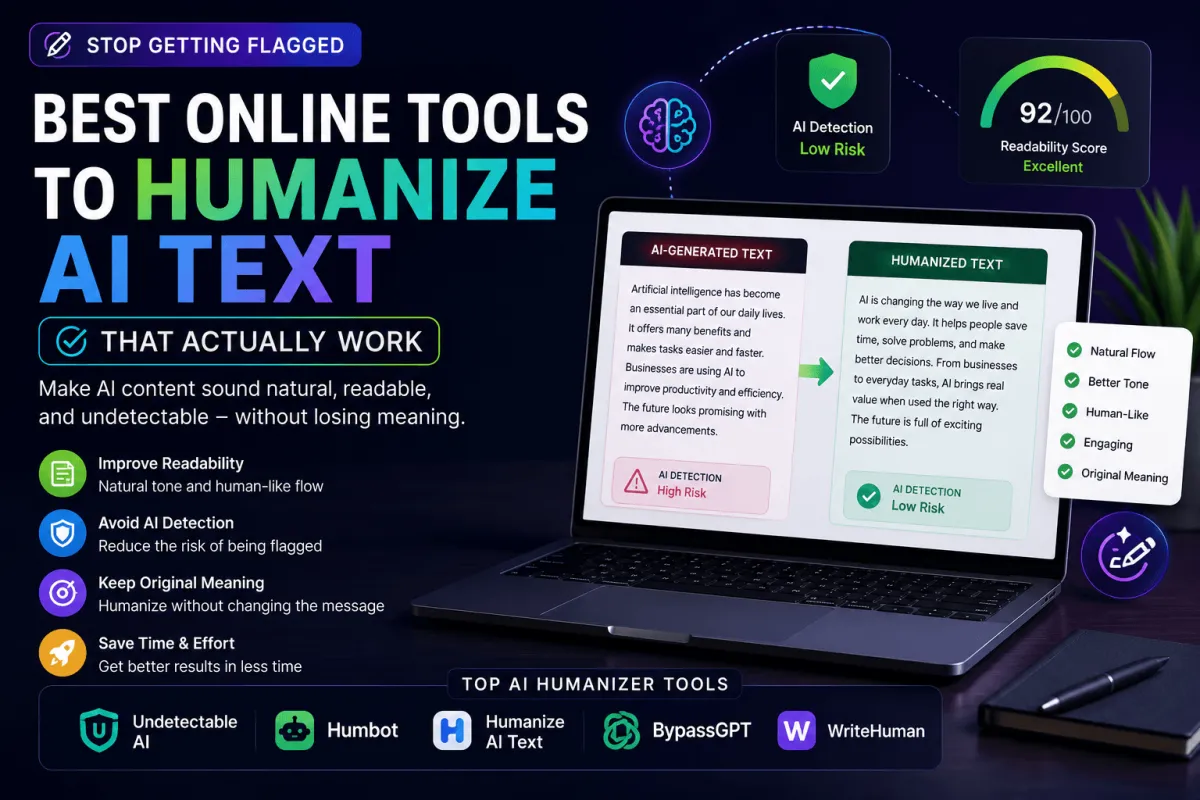
Undetectable AI is widely used because it focuses on improving sentence flow and readability. Humbot is another popular choice that offers multiple rewriting modes and flexible outputs. Humanize AI Text, BypassGPT, and WriteHuman are also frequently used by marketers and content creators. These tools can improve naturalness, but they still require human review before publication.
Users should never rely entirely on one platform. The best approach is to test multiple tools and compare their outputs. Run small sections through different platforms instead of processing an entire article immediately. At AI Innovative Tools, creators can achieve better results by combining technology with human editing rather than depending solely on automation.
How to Get Better Results From Any AI Humanizer Tool
Many users expect perfect results by simply pasting raw AI content into a humanizer. Unfortunately, this approach rarely produces high quality outcomes. AI generated content should always be reviewed and refined before using any humanizing tool.
Start by editing the structure of the original content first. Remove repetitive sentences, add unique insights, and clarify the overall message. Humanizers work more effectively when they receive organized content instead of untouched AI output. This extra step often creates more natural results.
Avoid processing an entire article at once because it can reduce consistency. Instead, humanize content section by section and review every output carefully. Once the rewriting process is complete, test readability and review the content manually. Human oversight remains essential because no tool fully understands your audience, industry, or brand voice.
Limitations of AI Humanizing Tools Most Users Find Out Too Late
AI humanizers can improve readability, but they also have limitations. Many users only discover these issues after publishing content or submitting assignments. Understanding these limitations can help you avoid common mistakes.
One major problem is that humanized content can still sound unnatural. Some tools successfully reduce detection signals but produce awkward phrasing that damages readability. Others may preserve sentence variety while changing the original meaning of the content. This can create factual inaccuracies that require manual corrections.
Another limitation is the loss of tone and brand identity. Businesses that rely entirely on automation may publish content that sounds inconsistent across different platforms. Over time, this can weaken audience trust and make content feel generic. AI tools should support writers instead of replacing their expertise and editorial judgment.
Conclusion
The demand for online tools to humanize ai text will continue to grow as AI generated content becomes more common. However, the goal should never be to fool detection systems or search for shortcuts. The real objective is creating content that sounds authentic, helpful, and engaging for readers.
AI humanizers work best when they are part of a larger content creation process. Strong results come from combining quality prompts, manual editing, and strategic use of technology. Writers who understand this balance will consistently create better content than those who depend entirely on automation.
Remember that no tool can guarantee undetectable content because detection systems constantly evolve and often produce inconsistent results. Instead of chasing unrealistic promises, focus on readability, originality, and audience value. The most successful creators use AI as an assistant rather than a replacement for human creativity. By following this approach, you can produce content that feels natural while maintaining quality and credibility.