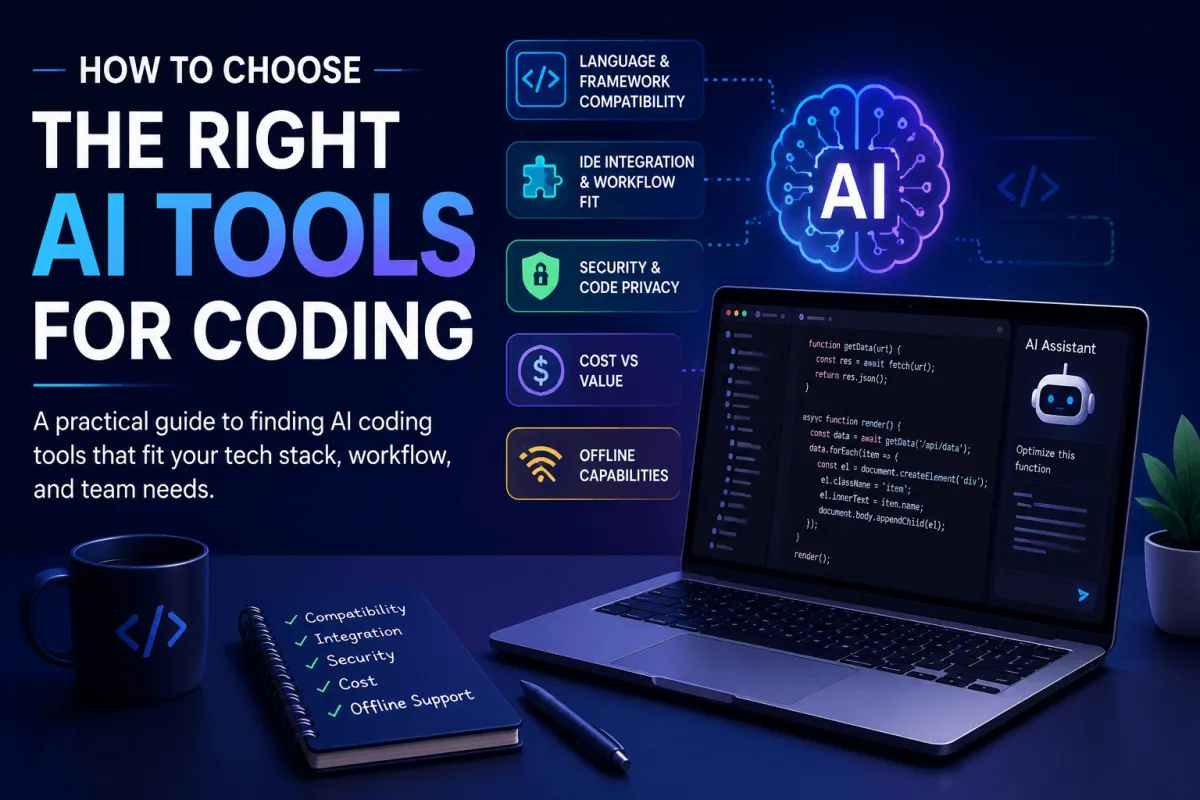
Finding the best ai tools for coding that align with your specific development environment has become a critical decision for modern engineering teams. Developers are no longer choosing tools based only on autocomplete features or simple suggestions. Instead, they need solutions that integrate deeply with their tech stack and workflow requirements.
The rise of advanced AI assistants has changed how software is written, reviewed, and optimized. However, not every tool performs equally well across different languages, frameworks, and infrastructures. This makes evaluation essential before committing to any single platform.
At Ai Innovate Tools, we focus on helping developers understand practical decision factors that reduce friction and improve productivity. Choosing the right AI tool is not only about features, but also about compatibility, security, and long term scalability.
Assessing Your Language Support and Framework Compatibility
One of the most important steps in selecting ai tools for coding is evaluating language support and framework compatibility. Many tools perform well in popular ecosystems like JavaScript, Python, or Java but struggle with niche or legacy systems.
Developers working with older frameworks often face inaccurate suggestions or incomplete syntax predictions. This can slow down development and introduce unnecessary debugging overhead. When a tool does not understand framework-specific patterns, its recommendations become unreliable.
Another common issue is outdated language version support. Some AI systems are trained on older datasets and fail to adapt to recent updates in frameworks or libraries. This creates conflicts between modern codebases and generated suggestions.
Choosing tools that actively maintain updated language models ensures better long term productivity. It also reduces friction when working across multiple services or hybrid stacks in real production environments.
You may also like:
Evaluating IDE Integration and Workspace Friction
Seamless integration with development environments is a major factor when selecting ai tools for coding. Many developers rely heavily on IDEs like VS Code, IntelliJ, or JetBrains-based platforms for daily workflows.
A major pain point arises when AI tools depend on heavy plugins that slow down the editor. High latency responses or lagging autocomplete suggestions can disrupt focus and reduce coding efficiency. These performance issues become more noticeable in large enterprise projects.
Another challenge is fragmented workflow design. Some tools require constant switching between a chat interface and the code editor, which breaks concentration. This constant context switching reduces productivity and increases cognitive load during complex tasks.
The best AI tools are those that integrate directly into the IDE without disrupting workflow flow. They should offer inline suggestions, contextual awareness, and real time assistance without requiring frequent manual interaction.
You may also like:
Analyzing Security Risks and Code Privacy Policies
Security is one of the most overlooked but critical aspects of ai tools for coding selection. Many developers unknowingly expose sensitive code snippets to external servers during usage. This can lead to potential data leaks or compliance violations.
Corporate environments face even greater risk when tools use public model training systems. If code is included in training datasets without consent, it can introduce intellectual property concerns. This is especially important for companies working with proprietary algorithms or sensitive user data.
Another concern is open source license contamination. Some AI models may generate code that unintentionally resembles licensed repositories. This can create legal complications if not carefully monitored during production use.
For this reason, organizations should prioritize tools that offer private deployment options or strict data isolation policies. Clear documentation on data usage and retention is essential for responsible adoption of any AI coding assistant.
You may also like:
Measuring the Cost vs Value Balance of Premium Tools
Cost evaluation plays a major role when selecting ai tools for coding, especially for growing teams. Many modern tools use seat-based pricing models that can become expensive as engineering teams scale.
One common challenge is unpredictable pricing structures that increase with usage or additional features. Teams may start with a low cost entry plan but quickly face rising expenses as adoption grows. This makes budget planning more difficult for long term projects.
Another issue is rigid licensing systems that do not support flexible usage patterns. Part time contributors or occasional developers may not require full access, yet still incur full seat costs. This creates inefficiencies in resource allocation.
The ideal solution is a pricing model that balances usage flexibility with feature access. Teams should evaluate whether premium features justify the cost based on actual productivity gains rather than theoretical benefits.
You may also like:
Reviewing Offline Capabilities and Network Dependencies
Offline capability is another important factor when choosing ai tools for coding, especially for distributed teams or remote environments. Many AI tools rely heavily on cloud-based processing, which creates dependency on stable internet connections.
In environments with poor connectivity, developers may experience interruptions or complete loss of assistance features. This can significantly impact productivity during critical development phases. Offline support becomes essential in such scenarios.
Some lightweight tools attempt to solve this by running smaller models locally. However, this introduces new challenges such as high CPU usage or memory consumption on local machines. Not all hardware setups can handle these demands efficiently.
The best tools provide a balanced hybrid approach that combines local caching with cloud processing. This ensures continuous productivity even when network conditions fluctuate or become unstable.
You may also like:
Conclusion
Selecting the right ai tools for coding requires a careful balance between compatibility, performance, security, cost, and offline usability. No single tool is perfect for every development environment, which makes structured evaluation essential.
Developers should prioritize language compatibility, smooth IDE integration, strong privacy policies, predictable pricing, and reliable offline performance. These factors collectively determine how effective a tool will be in real world scenarios.
At Ai Innovate Tools, we recommend creating a shortlisting checklist based on these criteria before committing to any platform. A well chosen AI coding assistant can significantly improve productivity, reduce errors, and streamline development workflows across modern tech stacks.