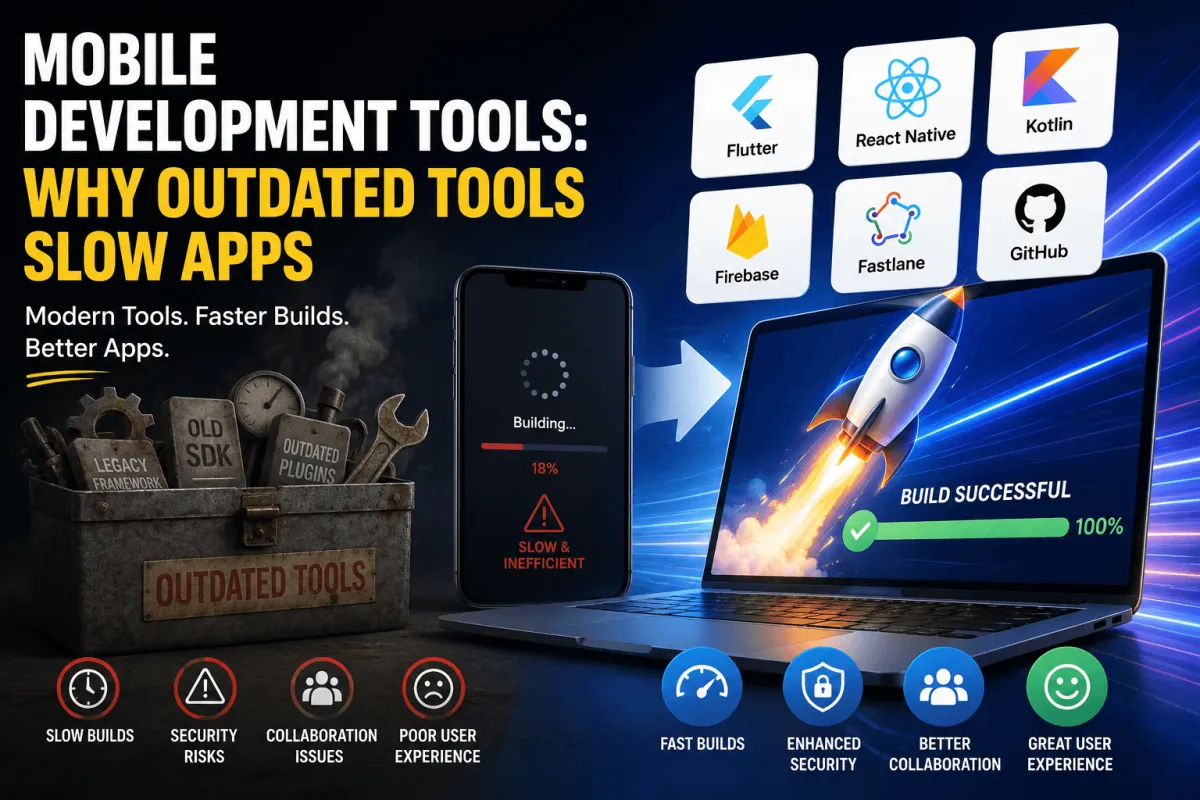
Mobile application development is evolving faster than ever, and businesses that fail to adapt often struggle to remain competitive. Many organizations still rely on outdated systems because they fear disrupting existing workflows. However, using old technologies can significantly reduce productivity, increase costs, and create security risks that affect both developers and end users.
Modern users expect applications to be fast, secure, and responsive across every device. Unfortunately, outdated mobile development tools cannot keep pace with these growing expectations. Development teams frequently experience slow builds, compatibility issues, and integration limitations that delay product releases and frustrate stakeholders.
At AI Innovate Tools, we regularly explore emerging technologies and software trends that help businesses build scalable applications. Understanding how outdated mobile development tools affect app performance will help organizations make smarter technology decisions and maintain long term competitiveness.
The High Cost of Legacy Code Maintenance
Many companies continue using old development environments because replacing them appears expensive and risky. However, maintaining legacy systems often becomes more expensive than upgrading them. Developers spend countless hours rewriting old code simply to maintain compatibility with newer operating systems.
Technical debt grows rapidly when software tools no longer support modern programming languages and frameworks. Instead of building new features, engineering teams become trapped fixing compatibility issues. This situation slows innovation and prevents businesses from responding quickly to market demands. Over time, these accumulated inefficiencies can severely impact overall productivity.
Legacy systems also create hidden costs that organizations often underestimate during budgeting. Teams may require additional specialists who understand outdated technologies that fewer developers use today. Hiring and retaining these professionals becomes increasingly difficult because most engineers prefer working with modern tools and frameworks.
You may also like:
Slow Build Times and Developer Frustration
Slow build times represent one of the biggest productivity killers in software development. Developers repeatedly wait for old compilers to finish processing code before testing even minor changes. These interruptions may seem insignificant individually, but they consume substantial time throughout a project lifecycle.
Outdated mobile development tools often lack efficient hot reload capabilities. Developers must restart entire applications instead of instantly viewing visual adjustments. This repetitive process disrupts creative workflows and reduces engineering momentum throughout the day. Over several months, these delays can translate into hundreds of lost working hours.
Fast development cycles have become essential for maintaining competitive advantages. Modern frameworks provide instant feedback mechanisms that allow teams to identify problems quickly. Businesses relying on outdated environments struggle to achieve similar efficiency levels, causing delayed releases and missed opportunities.
You may also like:
Security Vulnerabilities in Unpatched Environments
Security threats continue evolving every year, making regular updates essential for application safety. Outdated mobile development tools frequently stop receiving security patches from vendors. This leaves applications vulnerable to known exploits that attackers can easily target.
Unpatched environments expose sensitive user data to unnecessary risks. Customer information, payment details, and authentication credentials become potential targets for cybercriminals. A single security breach can damage customer trust and create significant financial losses for organizations.
Compliance requirements have also become stricter across many industries. App stores regularly update their security standards and technical requirements. Applications built using unsupported technologies may face rejection during submission processes. In severe cases, existing applications can even be removed from major platforms due to security concerns.
You may also like:
Friction in Team Collaboration and Version Control
Modern software development depends heavily on collaboration between multiple developers working simultaneously. Outdated environments often lack automated synchronization capabilities that simplify teamwork. As a result, teams experience more merge conflicts and inconsistent code structures.
Developers using old systems frequently encounter compatibility issues when sharing code repositories. Different machine configurations can produce unexpected errors that delay progress. These inconsistencies create confusion and force engineers to spend additional time troubleshooting instead of building new features.
Onboarding new developers also becomes extremely difficult in outdated environments. New team members may spend several weeks configuring fragile development setups manually. Modern mobile development tools simplify this process through automated workflows, allowing engineers to become productive much faster.
You may also like:
Poor User Experience Caused by Optimization Deficits
User expectations continue increasing as smartphone technology advances every year. Applications built with outdated technologies often struggle to utilize modern hardware capabilities efficiently. This limitation directly impacts application responsiveness and overall user satisfaction.
Older toolchains cannot fully leverage advanced graphics processors and hardware accelerators. Consequently, users experience frame rate drops, lagging animations, and delayed interactions. Poor performance quickly frustrates users because they expect smooth experiences on modern devices.
Application size also affects user retention significantly. Outdated mobile development tools often generate excessively large binary files that consume unnecessary storage space. Many users abandon downloads when applications require substantial bandwidth over mobile networks. Optimized applications improve retention rates by delivering faster installations and smoother performance.
You may also like:
Upgrading Your System Setup Without Breaking Production Workflows
Many organizations hesitate to modernize because they fear disrupting live applications. This fear often traps teams in outdated environments for years. Unfortunately, delaying upgrades only increases future migration complexity.
Businesses should approach modernization through gradual and carefully planned phases. Start by auditing existing tools, dependencies, and compatibility requirements. Identifying critical systems early helps reduce unexpected disruptions during implementation. Small upgrades performed consistently are safer than massive migrations performed infrequently.
Organizations should also establish clear migration roadmaps before introducing new technologies. Pilot projects allow teams to test updated environments without affecting production systems. Proper planning transforms software updates from high risk projects into manageable improvements that support long term growth.
You may also like:
Conclusion
Outdated technologies may appear stable, but they quietly reduce productivity, increase security risks, and limit future growth opportunities. Businesses that continue relying on old systems often experience slower development cycles, rising maintenance costs, and declining user satisfaction.
Modern mobile development tools enable faster builds, stronger security, better collaboration, and improved application performance. Investing in updated technologies helps organizations remain competitive while creating better experiences for both developers and users.
At AI Innovate Tools, our mission is to help businesses, developers, and technology enthusiasts stay informed about evolving software trends and development strategies. By replacing outdated systems with modern solutions today, organizations can build faster, safer, and more scalable mobile applications that remain successful for years to come.